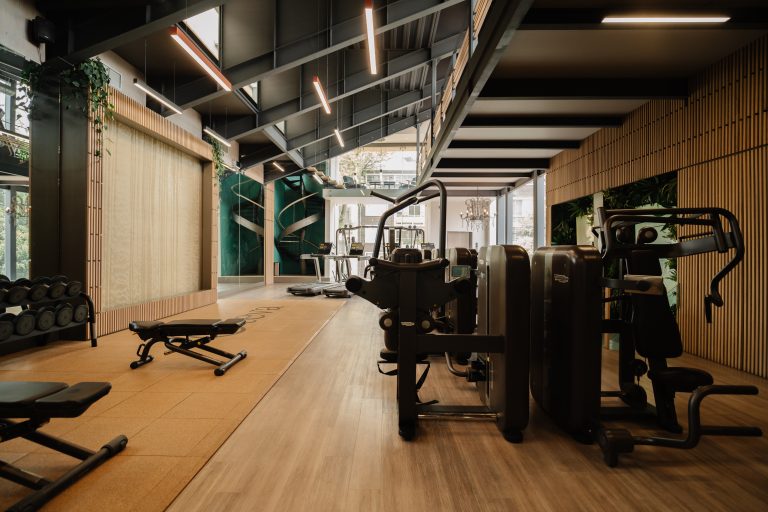

Movement: The Foundation of Adaptation
Every high performer knows these moments: the negotiation that runs three hours longer than expected, the early-morning flight followed by a full day of work, or the week in which there is simply no room for a bad day. What separates those who sustain their performance in these moments from those who do not is not willpower. It is physiology, and it is built long before the week begins.
Last week, we introduced the system behind TEVA Wellness & Lifestyle. This week, we explore its first pillar in greater depth: movement, and why the way you train determines how you perform under pressure. Training adaptation does not happen by accident. It results from the right stimulus, strategic recovery and a plan designed to evolve with you.
Adaptation Is Not Optional. It Is the Mechanism
The body does not improve simply because you move. It improves because you move in a way that forces it to adapt. This is the principle of progressive overload: a stimulus slightly greater than the one the body is already accustomed to, followed by recovery, followed by a body that is measurably and objectively more capable than before.
This is also the exact reason why unstructured movement—walking on a treadmill at the same pace or lifting the same weight for months—produces diminishing returns. The nervous and muscular systems stop responding once they have fully adapted to a stimulus that never changes. Progress requires a plan that continually moves the target, and that plan is the difference between a personalized training session with a Personal Trainer and simply “working out.”
A trainer is not there only to motivate you. It is worth separating three things that are often confused: a workout is any movement session; sweating for an hour has benefits, but it does not guarantee progress. An AI-generated program can calculate sets, repetitions and progression using data, but it cannot see what your technique looks like today or determine whether the fatigue you are experiencing is normal or a sign that the load needs to be reduced.
A Personal Trainer is the person who turns that session into part of a structured training plan with genuine progressive overload and adjusts it in real time based on what they see, not only on what an algorithm assumed the previous week. Their role is not simply to motivate you, but to manage the variables you do not have time to track: load, volume, recovery windows, movement quality, and when to increase or reduce the stimulus, using the judgment of someone watching you train rather than merely processing your data.
For someone whose schedule is already full, this management is what turns limited training time into results that accumulate instead of a plateau. That is the real value of personalized training: ensuring that every session is part of a measurable and sustainable process.
Why Variety Is Not a Marketing Idea
TEVA’s boutique fitness classes exist for the same physiological reason—not as a menu of options, but as different angles of stimulus:
Yoga
Yoga develops joint mobility and neuromuscular control, the foundation that keeps the rest of your training safe as intensity increases.
Cycling and Boxing
Cycling and Boxing challenge cardiovascular capacity under real intensity, the type of conditioning that translates into more stable energy throughout a demanding day instead of a crash at 3:00 PM.
Animal Flow and Hybrid
Animal Flow and Hybrid train functional movement patterns that your body actually uses outside the gym: carrying things, spending hours sitting down, and then standing up and moving with control.
Pilates
Pilates strengthens the deep postural chain, the muscles that keep you upright and stable throughout eight hours at a desk or on a flight.
Rotating between these stimuli is not variety for variety’s sake. Boutique fitness classes keep the nervous system responding instead of allowing it to adapt completely to a routine that never changes—the same reason a well-designed training plan evolves every few weeks rather than repeating itself indefinitely.
This combination of personalized training and boutique fitness classes develops strength, mobility, control and cardiovascular capacity from different angles, building more complete and sustainable physical performance.
What This Means
Training this way is not only about looking good or having more energy on a particular day. The real benefits become noticeable at specific moments:
You arrive at the fifth meeting of the day as sharp as you were at the first. This is not just a feeling: a trained body takes longer to accumulate the fatigue that can impair your decision-making as the day progresses.
You find it easier to disconnect at night. Training reduces the stress accumulated throughout the day, so you can go to bed without continuing to think about tomorrow’s unfinished tasks, helping you sleep better.
You still have energy when you close your laptop. You do not arrive home only to collapse on the couch. Instead, you have enough energy to be present with your family or your life outside the office, which is what you are truly protecting through all of this.
After three months, you can lift more weight with the same perceived effort, your resting heart rate decreases and you recover more quickly between sets. This is not about training harder for the sake of it. It is about following a structured training plan that makes the rest of your day easier—the part that truly matters.
Your TEVA Wellness & Lifestyle membership already includes boutique fitness classes, and you have the option to incorporate a Personal Trainer into your experience. The question is not whether you have the tools. It is whether your current routine is taking you somewhere or simply repeating itself.
Daniel Peralta
Operations Manager
TEVA Wellness & Lifestyle