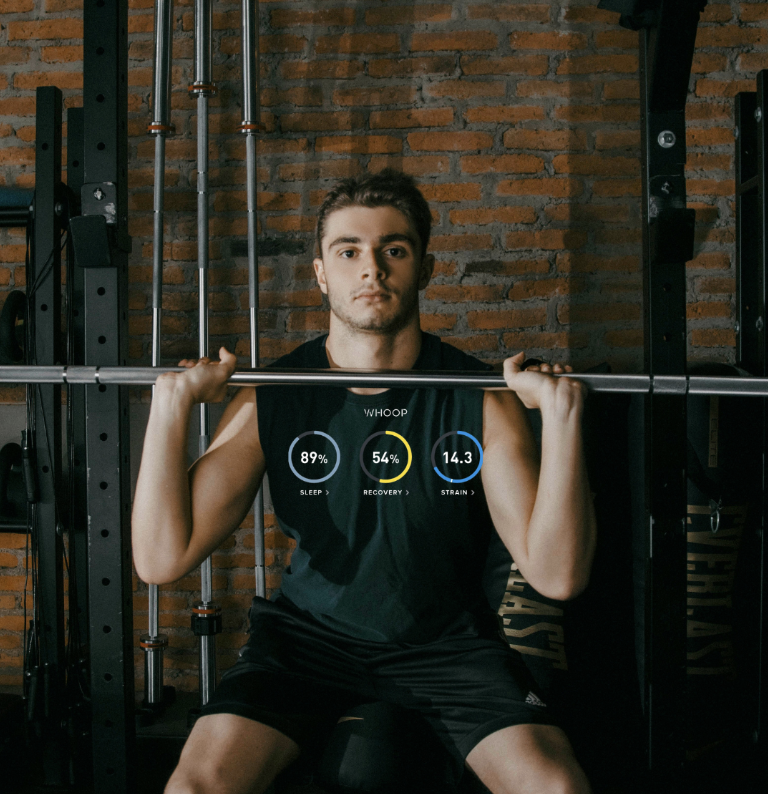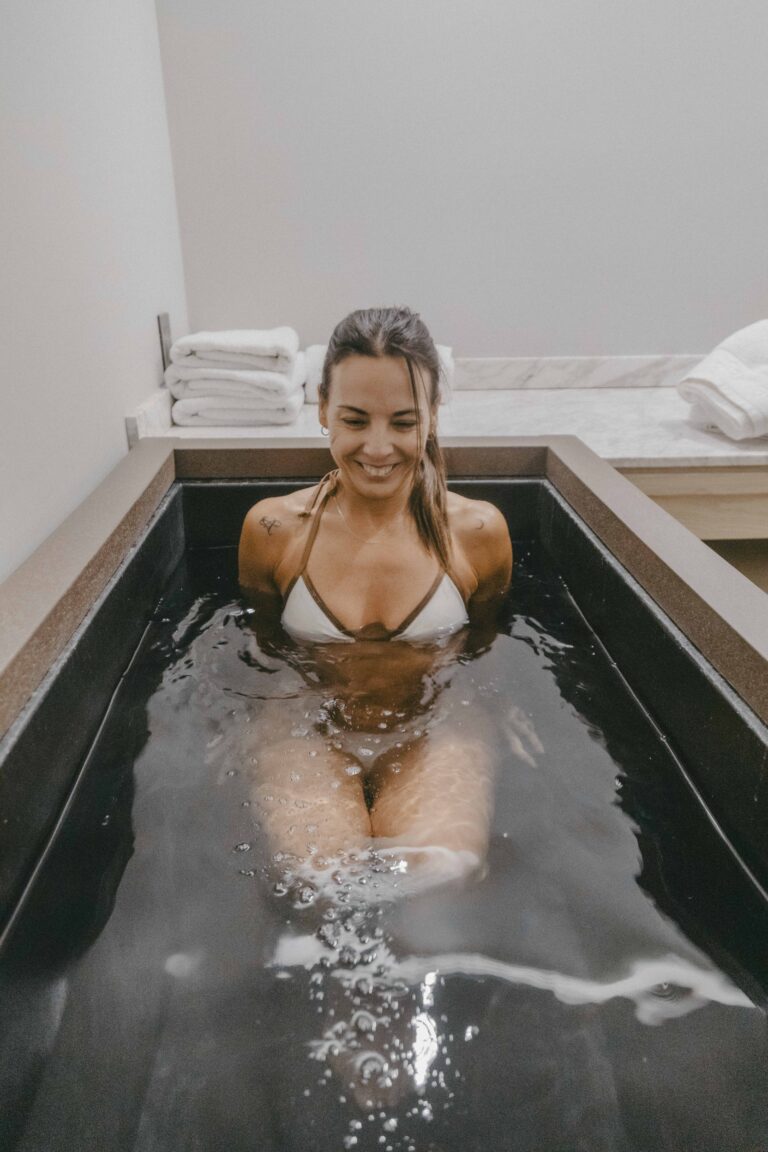

The discomfort you choose is the best preparation for the discomfort you don’t.
The Power of Difficulty: How Sauna and Cold Exposure Build Resilience
Minute four.
The heat stopped being pleasant a while ago. Your breathing shortens, your heart rate climbs, and a very persuasive voice speaks up: “That’s enough. You have nothing to prove. Get out.”
That voice isn’t entirely lying. It isn’t telling the whole truth either.
What happens in that minute is probably the most valuable part of the entire practice. And almost no one uses it.
What the science says about sauna and cold exposure
Let’s start with the body, because the evidence is striking.
In Finland, researchers followed more than 2,300 men for about 20 years. Those who used the sauna four to seven times a week had a 50% lower risk of cardiovascular death, a 63% lower risk of sudden cardiac death, and 40% lower all-cause mortality than those who used it once a week.
The same research group found something even more remarkable: at that same frequency, the risk of developing dementia was 66% lower.
The response to cold exposure is just as powerful. In a classic study, immersion in 14 °C water raised noradrenaline more than fivefold and dopamine more than twofold. These are the molecules of focus, energy, and mood.
In Copenhagen, winter swimmers who combined cold water and sauna showed greater heat production in the cold and more active brown fat, the tissue the body uses to generate energy.
And in the Netherlands, people trained in cold exposure and breathing techniques were able to voluntarily modulate their inflammatory response, something long believed to be beyond our control.
The pattern repeats across every study: the body responds to what you practice consistently. Not an occasional visit. Frequency.
And there is one more benefit. One that doesn’t stay in the sauna or the water: it goes everywhere with you.
Meditation, mental resilience, and the heat of everyday life
Meditating in a comfortable room is easy. Life is not a comfortable room.
Think of focused-attention meditation. You sit, choose a point of focus, and within seconds the mind wanders. You notice. You return. It wanders again. You return.
Researchers at Emory University mapped that exact cycle: wandering, noticing, returning, and sustaining attention. Each phase engages different brain networks. Every return is a repetition, like a set in strength training.
But we almost always practice it in silence, at a pleasant temperature, with nothing at stake.
Now picture a real Tuesday. An email from the bank you weren’t expecting. A conversation waiting for you at home. What your team expects of you, what your family expects of you, what you expect of yourself. None of it asks permission. It all arrives at once, and the temperature rises.
That is the heat of everyday life. And that is exactly where you want to think clearly, decide well, and respond the way you would choose to, not the way the moment pushes you.
Chosen discomfort is a laboratory
Sauna, cold water, and demanding training have something comfortable meditation does not: the discomfort is real. It is also chosen, measured, and temporary.
That makes them a safe laboratory for practicing what life will ask of you without warning.
Neuroscience offers an interesting clue. A group of researchers at Harvard and Massachusetts General Hospital has studied a region called the anterior mid-cingulate cortex. It activates when you do something difficult you would rather avoid, and it has been linked to tenacity. In older adults with exceptional memory, it tends to be better preserved.
The practical reading is simple. The brain specializes in what you repeatedly ask of it. That is how neuroplasticity works: what you practice becomes more available. If you leave every time things get hard, leaving is what you are training.
There is one more nuance. Researchers at Stanford and Yale showed that the way you interpret stress changes how it affects you. People who learned to see stress as something that can drive them reported better performance and fewer symptoms than those who saw it only as a threat.
The uncomfortable moment is not the obstacle to the practice. It is the practice.
What to do at minute four in the sauna
1. Listen to the voice. Don’t obey it on autopilot. What exactly is it saying? “I can’t.” “This is pointless.” “No one will notice.” Pay attention: these are the same phrases that show up in a tense negotiation or an argument.
2. Come back to the body. Lengthen the exhale. Release your shoulders and jaw. It is the same return as in meditation, now with real heat.
3. Choose. Don’t flee. Staying thirty more seconds or stepping out are equally valid, as long as each is a decision. Discomfort is not the same as an alarm signal. If you feel dizzy, have chest pain, or feel confused, leave immediately. Listening to your body is mental strength too.
4. Observe afterward. When you finish, take a minute. Which voice showed up today? Where else in your life do you hear it? That is your next area of growth.
What you are really building: resilience beyond physical training
The goal was never to tolerate more heat or more cold.
The goal is that when life turns up the temperature, you already know those voices. That you recognize them before they decide for you. That you have a space, even a single breath, between what you feel and what you do.
The next time your minute four arrives, don’t wait for it with fear. Wait for it with intention.
That is where you grow. And not only physically.
References
Laukkanen T. et al. Association between sauna bathing and fatal cardiovascular and all-cause mortality events. JAMA Internal Medicine, 2015.
Laukkanen T. et al. Sauna bathing is inversely associated with dementia and Alzheimer’s disease in middle-aged Finnish men. Age and Ageing, 2017.
Šrámek P. et al. Human physiological responses to immersion into water of different temperatures. European Journal of Applied Physiology, 2000.
Søberg S. et al. Altered brown fat thermoregulation and enhanced cold-induced thermogenesis in young, healthy, winter-swimming men. Cell Reports Medicine, 2021.
Kox M. et al. Voluntary activation of the sympathetic nervous system and attenuation of the innate immune response in humans. PNAS, 2014.
Hasenkamp W. et al. Mind wandering and attention during focused meditation. NeuroImage, 2012.
Touroutoglou A. et al. The tenacious brain: how the anterior mid-cingulate contributes to achieving goals. Cortex, 2020.
Crum A., Salovey P., Achor S. Rethinking stress: the role of mindsets in determining the stress response. Journal of Personality and Social Psychology, 2013.