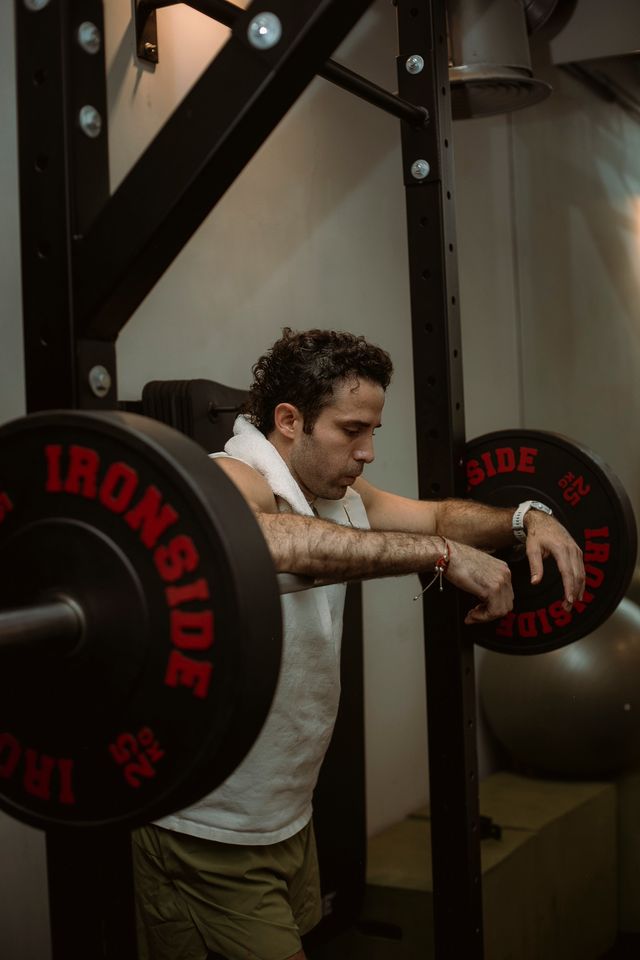

Train All of You Vol.II
There is something interesting that happens when we start training: little by little, the things that once felt difficult begin to feel different.
The same stairs. The same distance. The same way home. But one day, you reach the top and realize you no longer need to stop to catch your breath. Not because the stairs have changed, but because something inside you has.
And that is where we can begin to talk about VO₂ max.
What is VO₂ max?
Think of two cars traveling along the same road at the same speed. From the outside, they may look exactly the same. But under the hood, there may be a significant difference: one engine is working close to its limit, while the other maintains the same speed with far greater ease—and still has the capacity to accelerate.
Our bodies have their own engine.
Every time we move, our muscles need energy. To produce it, they need oxygen. And for that oxygen to reach them, an entire system has to begin working: the lungs take it in, the heart pumps the blood, and the blood carries it wherever it is needed.
As the intensity increases, that system has to work increasingly faster.
You run a little farther.
You climb a hill.
You speed up to catch someone.
You play a match and, suddenly, the pace changes.
The body receives a new demand and has to find a way to respond.
VO₂ max—or maximal oxygen uptake—allows us to observe how far that system can go during intense effort: how much oxygen the body can take in, transport, and use when we truly ask it to work.
But beyond the number, there is an idea I find far more interesting.
Capacity.
More than a number for athletes
Because training should not only help your body do more. It should also help your body do the same things with less effort.
Think of someone who climbs five flights of stairs and reaches the top desperately trying to catch their breath. Now think of someone who climbs those same five flights, reaches the top, takes a deep breath, and continues with their day.
The floors are the same.
The difference is in the engine carrying them upward.
And that engine does not work only when you are at the gym. You carry it with you when you walk through a city, go on a long hike, play with your children, run to catch the subway, climb a mountain, or simply face one of those days that seems to demand energy from the moment you wake up until you finally go to bed.
That is why VO₂ max should not feel like a number reserved for athletes.
It is a way of understanding your body’s capacity to respond when demand increases.
Because life changes pace too.
There are quiet days and days that feel like a race.
There are moments when you can move at your own pace and others when you need to accelerate, hold on, recover, and begin again.
And the greater your cardiovascular capacity, the more room you have to respond.
It is not about living at full speed.
It is about having an engine that does not need to work at its limit every time life accelerates.
Train the engine behind everything else
We train strength so we can carry more.
We train mobility so we can move better.
We train endurance so we can last longer.
And we train our cardiovascular system to build the capacity we cannot always see, but that appears every time we need a little more from ourselves.
Because perhaps being fit is not only about being able to go farther.
Perhaps it is also about going farther without feeling that your body had to give everything it had to get there.
The goal is not only to run faster, lift more weight, or look better.
It is to build a body with greater capacity, greater efficiency, and more reserve for everything life still has in store.
Do not train only what you can see.
Train the engine that makes everything else possible.
Do not train only your body.
Train ALL of you.