
How Biological Variability Shapes Personalized Training and Performance
The science of biological variability and the end of universal training
In the world of fitness and performance, one comfortable idea still survives:
effort + consistency = results.
And yes, effort matters. Discipline matters.
But when we honestly observe what happens in gyms, wellness spaces, performance centers, and sports clinics, an uncomfortable question appears:
Why do two people train together, follow the same program, lift the same weight… yet one progresses significantly more than the other?
The answer is not motivational. It is biological.
The body is not a standard template
The human body does not respond like a programmed machine. It is a complex system that adapts every stimulus according to its own internal configuration.
Every person approaches training with a unique combination of:
- Genetics
- Epigenetics
- Athletic background
- Body composition
- Hormonal profile
- Metabolic state
These variables determine how you produce energy, build muscle, mobilize fat, and recover from physical stress.
For example:
- Mitochondrial density — essential for aerobic performance and longevity — can vary significantly between individuals.
- The ratio of fast- and slow-twitch muscle fibers directly influences responses to strength or endurance training.
- Factors such as insulin sensitivity and neuromuscular efficiency may create profound differences in adaptation and recovery.
Exercise science has extensively documented this individual variability in training response (Bouchard & Rankinen; Ross et al.; Timmons). This is not theory — it is decades of accumulated evidence.
Context trains too
Internal biology is only part of the equation. Environment matters just as much.
Two people may complete the exact same training session.
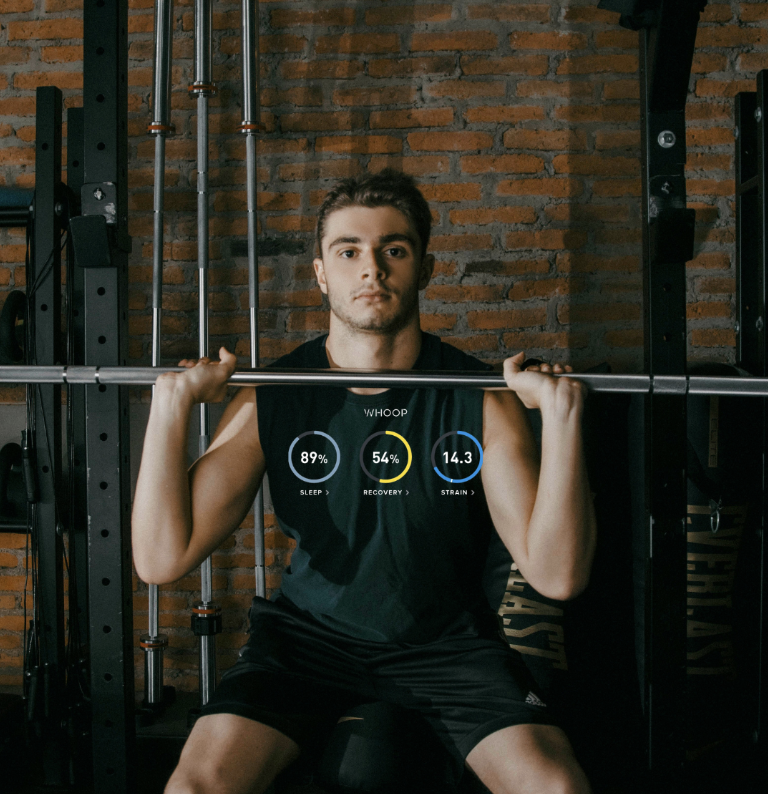
But if one sleeps eight hours while the other sleeps five, the physiological impact will not be the same.
Variables such as:
- Sleep quality
- Psychological stress
- Nutrition
- Daily activity levels
- Emotional or professional load
all influence how the body interprets physical stimulus.
Training does not end when you leave the gym. It continues through recovery, sleep, nutrition, and stress regulation.
The myth of “non-responders”
For years, people spoke about individuals who supposedly “do not respond” to exercise.
Current evidence suggests something different: in most cases, these individuals do respond… once the appropriate dose is found.
More intensity.
More volume.
More frequency.
Or, in some cases, less.
Very few people are incapable of adaptation.
They simply have not yet discovered the right stimulus for their individual biology.
The end of universal training
Once we understand this reality, everything changes.
The goal is no longer to copy the workout that worked for someone else.
The goal becomes discovering which combination of stimuli creates adaptation within your own biological system.
At TEVA, we believe progress should not be measured by comparison, but by observing how your functional capacity, recovery, and overall wellness evolve over time.
It is not about becoming someone else.
It is about optimizing your own biology.
When training aligns with individual needs, results stop feeling unpredictable… and begin to become sustainable.
The TEVA Perspective
Progress is not a genetic competition.
It is a conversation between stimulus and biology.
Listen to your body. Adjust the dose.
And leave behind the idea that there is one universal formula.
Because in performance, wellness, and longevity, personalization is not luxury. It is precision.
References
- Bouchard, C., & Rankinen, T. Individual differences in response to physical activity. Medicine & Science in Sports & Exercise.
- Ross, R. et al. Individual variability in response to exercise. Journal of Applied Physiology.
- Timmons, J. A. Variability in training response. Nature.